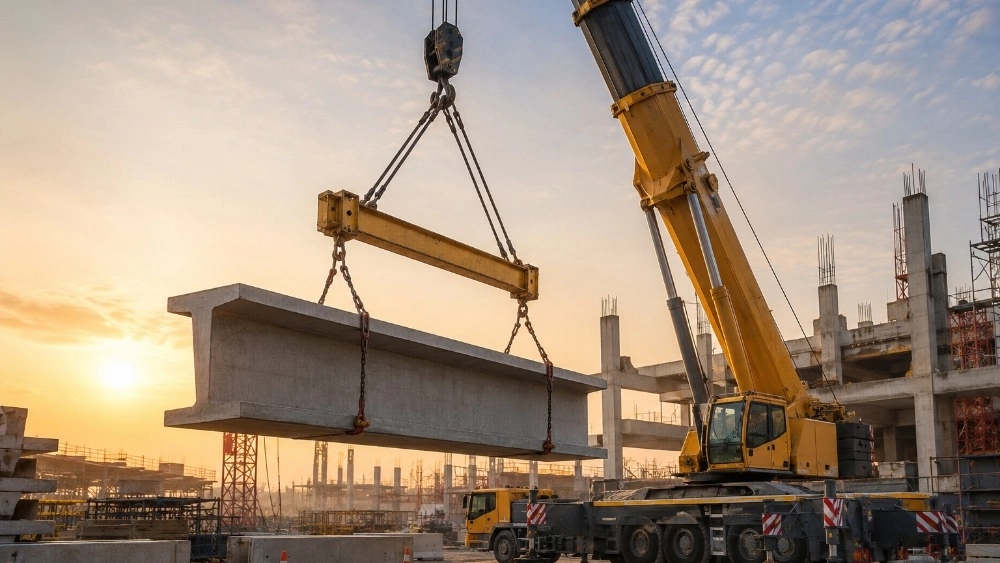
The importance of planning in carrying heavy concrete beams with a crane
- Examination of structural drawings and beam specifications
- Determination of actual weight, length, permitted loading points and center of gravity
- Choosing the appropriate crane and standard accessories
- Determining the path of load movement, crane location and prohibited area
- Estimating timing, manpower and emergency scenarios
Choosing the right crane to carry heavy concrete beams with a crane
The main criteria for choosing a crane
- Capacity in the actual radius: the weight of the beam plus the weight of slings, shackles, hooks and equipment
- Required height: to pass obstacles or installation at a high level
- Maneuvering radius: the distance of the crane to the place of removal and installation
- Ground stability and the possibility of outrigging: preventing settlement and Overturning
- Crane Type: Mobile, Telescopic, Dry Boom, or Heavy Duty Combinations
Knowledge of concrete beam and its effect on carrying heavy concrete beams with crane
- Normal prefabricated beams: sensitive to point impact and buckling
- Prestressed beams: sensitive to hairline cracks and unwanted stresses
- Long beams with initial spring: center of gravity and different dynamic behavior
- T or I-shaped beams: risk of rolling and rolling in rotation When lifting
Lifting equipment and connections in carrying heavy concrete beams with cranes
Common equipment and their use
- Wire sling: suitable for high weights, need edge protection to prevent damage
- Belt sling: to protect the concrete surface, but must be compatible with sufficient capacity and environmental conditions
- Shackle and safe hook: with appropriate safety factor and safe pin
- Earring/lifting insert: in beams Designed for harvesting
- beam spreader: reduce the sling angle and control beam bending
Preparing the workshop for carrying heavy concrete beams with a crane
- Crane and trolley traffic route preparation: removal of obstacles, control of crossing height
- Leveling and reinforcement of the location: preventing outriggers from settling
- Air obstacle control: electric cable, scaffolding, nearby structures
- Creating a safe and secure area: preventing the presence of people Unrelated
- Signalman and Operator Coordination: Standard Signals and Safe Communication
Step-by-step implementation of carrying heavy concrete beams with a crane
1) Final visit and control before the lift
- The apparent health of the beam and the absence of dangerous cracks
- The conformity of the declared weight with the actual conditions
- The health of slings, shackles, hooks and latches
- The readiness of the load movement path and the safety area
2) Rigging correctly
3) Test Lift
4) Controlled displacement
5) Precise installation
Common risks in carrying heavy concrete beams with a crane and how to reduce them
Overturning or instability of the crane
- Excessive beam or miscalculation of capacity
- Outriggers sitting on loose soil
- Wind or sudden load movement
- Selecting the actual capacity with a margin of confidence
- Appropriate foundation and padding of the outrigger
- Limiting the operation in unfavorable wind conditions
Concrete beam damage
- Closing the sling at the wrong point
- Lack of edge protection and crushed corners
- Additional bending in long poles