The hydraulic system is one of the types of power transmission systems, which is responsible for converting a small initial force into a strong output force. Moving heavy objects and controlling power transmission requires a lot of power, which is sometimes impossible to provide with normal methods.
Crane hydraulic system
Hydraulics is a science in which the force produced by pressurized liquids is used to perform work. So, in a simpler and more general language, doing work by pressurized liquids is called hydraulics. That means it can be He said, the law of incompressibility of liquids is the main basis of hydraulic science. Hydraulic science has a very wide application, for example, the following can be mentioned:
Car steering system
Car braking system
Function of jacks and lifts
Lathe and milling machines
Hydraulic press
Today, hydraulics is called as the most powerful system for transferring and moving power, and this science is used to perform tasks that require a lot of power.
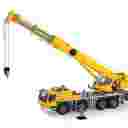
Hydraulic crane
Hydraulic cranes are one of the most widely used engineering and construction tools, which are used in all kinds of projects due to their high power, precision, and flexibility. We will examine the operation of hydraulic cranes step by step.
What is the hydraulic system in cranes?
Hydraulic cranes use systems that are designed based on power transmission through pressurized fluids. This technology consists of the following main components:
Hydraulic pump: Hydraulic pump is responsible for generating pressure and transferring fluid to other components.
Hydraulic cylinder: Converting fluid pressure into mechanical force for moving arms br> Control valves: Adjust the pressure and direction of fluid movement.
Hydraulic fluid tank: Maintenance and supply of fluid needed by the system.

How to work with hydraulic cranes:
1. Power generation with hydraulic pump
Hydraulic crane operation starts with the pump. This pump sucks hydraulic fluid from the tank and transfers it to the system circuit by creating high pressure. This liquid is usually an oil that has the property of being non-condensable. 2. Transferring pressure to cylinders
Liquid under pressure is transferred to hydraulic cylinders through pipes and control valves. Depending on the type of design, these cylinders can create a linear movement (to open and close the arms) or a rotation. 3. Converting pressure into mechanical movement
Inside the cylinder, the hydraulic fluid causes the piston to move. This movement, in turn, provides the mechanical force necessary to lift the load. Precise control of piston movement is possible through control valves. 4. Adjusting and controlling movements
The crane operator can use levers and controllers to change the pressure and direction of the liquid movement and thus adjust the arms in different angles and positions. . This precise control is essential for lifting heavy loads and moving them safely.
The benefits of using hydraulic system in cranes
Hydraulic cranes are preferred in many industries because of the following features:
High power: Ability to lift heavy loads up to several tons.
> High precision: Exact control of the movement of arms and loads.
Flexibility: Suitable for various applications, from construction to oil and gas industries.
Reduction Space required: Compact design and can be used in limited environments.
Different applications of hydraulic cranes
Hydraulic cranes are used in a wide range of industries and projects. In the construction industry, these cranes are used to lift and move heavy materials such as concrete and steel. In urban construction projects, the accuracy and flexibility of these systems provide the possibility of working in crowded and limited environments. In the oil and gas industry, hydraulic cranes play a key role due to their high resistance to harsh conditions and the ability to move bulky and sensitive equipment. These cranes are especially used in drilling operations and installation of heavy infrastructure equipment.
Hydraulic cranes are also used in the transportation of bulky loads such as containers in ports due to their high speed and efficiency. These systems allow operators to unload and load loads with high precision and safety. Such capabilities increase productivity and reduce operation time. In mines, hydraulic cranes are used to move stones and heavy minerals due to their strength and durability. These systems have the ability to perform heavy operations in difficult environmental conditions and contribute to overall productivity.